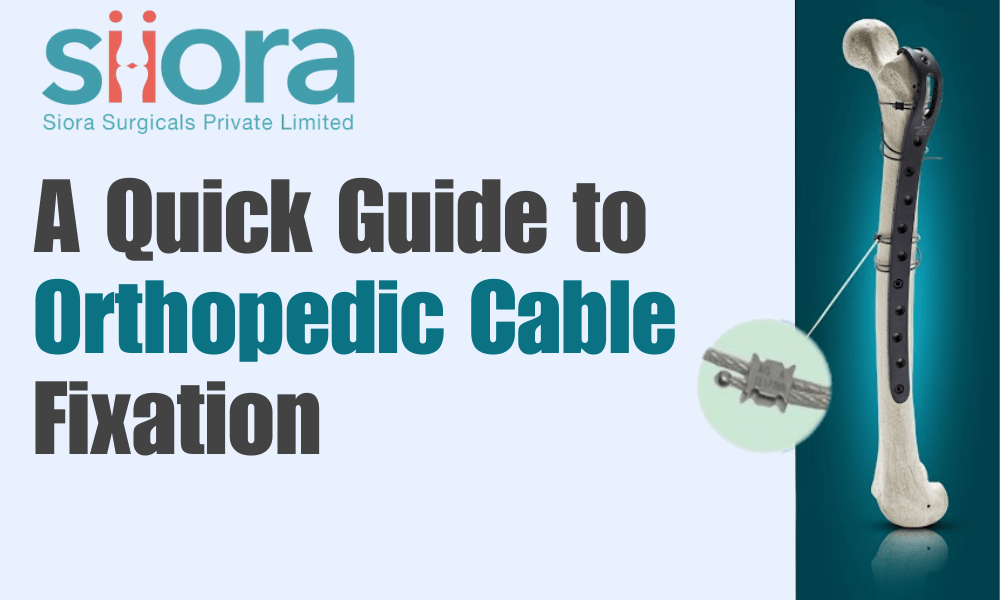
Orthopedic cable fixation might sound like a complex surgical term, but at its core, it’s a smart and effective method used by surgeons to stabilize bones, especially in tricky fracture areas. If you’ve ever broken a bone or know someone who has, there’s a chance cable fixation played a role in their recovery, especially in cases involving the shoulder, hip, or elbow. This guide will walk you through the essentials, all in an easy-to-understand and human-friendly way.
What is Orthopedic Cable Fixation?
In simple terms, cable fixation involves using specialized surgical cables, usually made of stainless steel or titanium, to hold fractured bones together. Think of it like tying up a bundle of sticks: the cables keep everything tightly packed until healing begins. These cables are strong, flexible, and resistant to corrosion, making them ideal for internal use.
Unlike traditional screws and plates, cables can be wrapped around bones or implants to reinforce areas where rigid fixation might be difficult. That’s why this method is commonly used in complex or comminuted fractures, where bones are broken into several pieces.
When is Cable Fixation Used?
Orthopedic surgeons turn to cable fixation in a variety of scenarios, such as:
- Hip fractures, particularly during revision hip arthroplasty (a type of hip replacement surgery).
- Periprosthetic fractures, which occur around joint implants.
- Patella (kneecap) fractures, to maintain proper alignment.
- Olecranon (elbow) fractures, where cables can hold small bone fragments together.
- Sternum or clavicle fixation after trauma or surgery.
In these cases, cables offer a way to hold fragile or fragmented bone securely, without relying entirely on screws, which may not get enough purchase in small or irregular fragments.
How Does the Procedure Work?
During surgery, the orthopedic team will expose the fracture site and assess the extent of the damage. If cable fixation is appropriate, they’ll wrap one or more cables around the affected bone and tighten them using a tensioning device. The goal is to provide enough compression across the fracture so the bones are stabilized and healing can begin.
Sometimes cables are used alone, but often, they’re combined with plates or rods to create a hybrid fixation system. Once the cable is secure, it remains inside the body as the bone heals naturally. Most of the time, these cables are permanent and don’t need removal unless they cause irritation or complications.
What Are the Benefits of Cable Fixation?
Cable fixation has gained popularity for a number of reasons:
- Versatility: It adapts well to irregular or curved bone surfaces.
- Strength and durability: Cables provide robust fixation, especially when dealing with weakened or osteoporotic bone.
- Minimally invasive options: In certain cases, surgeons can use cables without extensive soft tissue disruption.
- Supplementary use: They work great alongside other fixation methods like plates and rods.
For patients, this often translates to faster recovery, reduced surgical time, and better functional outcomes.
Things to Consider
As with any surgical technique, cable fixation isn’t without its limitations. Over-tightening can damage bone or soft tissue. If not placed carefully, cables may cause irritation or even break over time. That’s why proper surgical technique and postoperative care are essential.
Also, the patient’s overall health, bone quality, and the nature of the injury all play a role in deciding whether cable fixation is the right choice. Surgeons tailor their approach to each individual case, ensuring the best possible results.
Final Thoughts
Orthopedic cable fixation might not be something most of us think about daily, but it plays a vital role in modern fracture management. It combines surgical precision with biomechanical strength, offering support in some of the toughest situations bones can face.
Whether you’re a patient researching treatment options or just curious about how bones heal after serious injury, understanding cable fixation gives you a small but fascinating peek into the world of orthopedic care, where strength, science, and healing come together.
If you are looking to get an international standard range of trauma implants, including a cable plating system, explore the inventory of Siora Surgicals Pvt. Ltd. With the presence in over 50 countries, the company is also looking for distributors of orthopedic implants in Argentina.
 Orthopedic Implant Company